The God Who Cannot Walk
Hephaestus falls from heaven and lands lame. Wayland is hamstrung so he cannot leave. Across five traditions the divine smith is marked, injured or exiled — and nobody agrees why.
Read the essayComparison12 min read
Fire • Anvil • Gold
Gods are born, heroes are chosen, monsters simply exist — but the objects that decide these stories are made, by somebody, in a workshop, at a price. Emberwright is an archive of that workshop: the smith-gods who keep it, the blades and hammers that leave it, and the reason fantasy has never been able to walk past a forge.
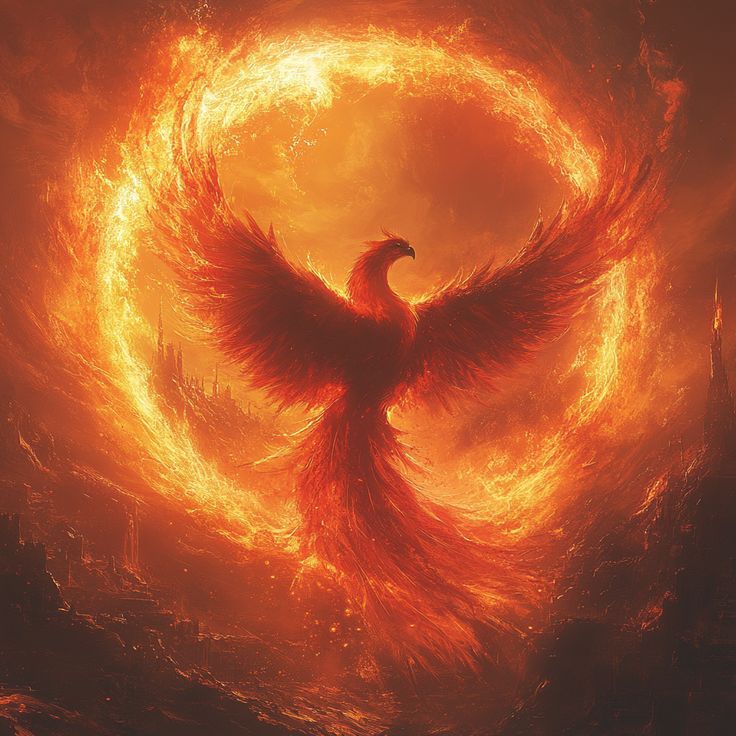
Four ways in
Four essays on the same room, approached from four directions: the person at the hearth, the objects that leave it, the metal itself, and the version of the forge that a modern studio hands you as a menu.
Hephaestus falls from heaven and lands lame. Wayland is hamstrung so he cannot leave. Across five traditions the divine smith is marked, injured or exiled — and nobody agrees why.
Read the essayTreasure gets discovered. Weapons that matter get forged. The difference is not decorative — a made object drags a maker, a debt and a flaw into the story with it.
Read the essayWhy hoards are cursed, why dragons sleep on coin, and why one soft, useless, unreasonably heavy metal ended up standing in for the sun in almost every tradition that had one.
Read the essayEvery fantasy game builds one, and not out of nostalgia. The forge is the only mythic location that is also a working menu: improvement, cost and risk in a single room.
Read the essayDeep reading
Fire in myth is not a single symbol wearing three costumes. Traditions that share almost nothing else tend to separate these three fires carefully, give them different guardians, and punish anyone who confuses them.
Hestia and Vesta guard a flame that is never allowed to go out and never asked to make anything. Its whole function is continuity: the household, the city, the year. A hearth fire that dies is a civic emergency.
The only one of the three that produces. It takes ore, which is worthless, and returns iron, which decides wars. This is the fire with a craftsman standing over it, and the only one that requires skill rather than devotion.
Consumption, cremation, the burning of cities. It gives nothing back except smoke and, in a handful of traditions, a bird — which is exactly why the phoenix reads as an exception rather than a rule.
A bestiary of fire
Not creatures that use fire — creatures whose substance is fire. They appear independently in traditions that never met, and the family resemblance is closer than it has any right to be.
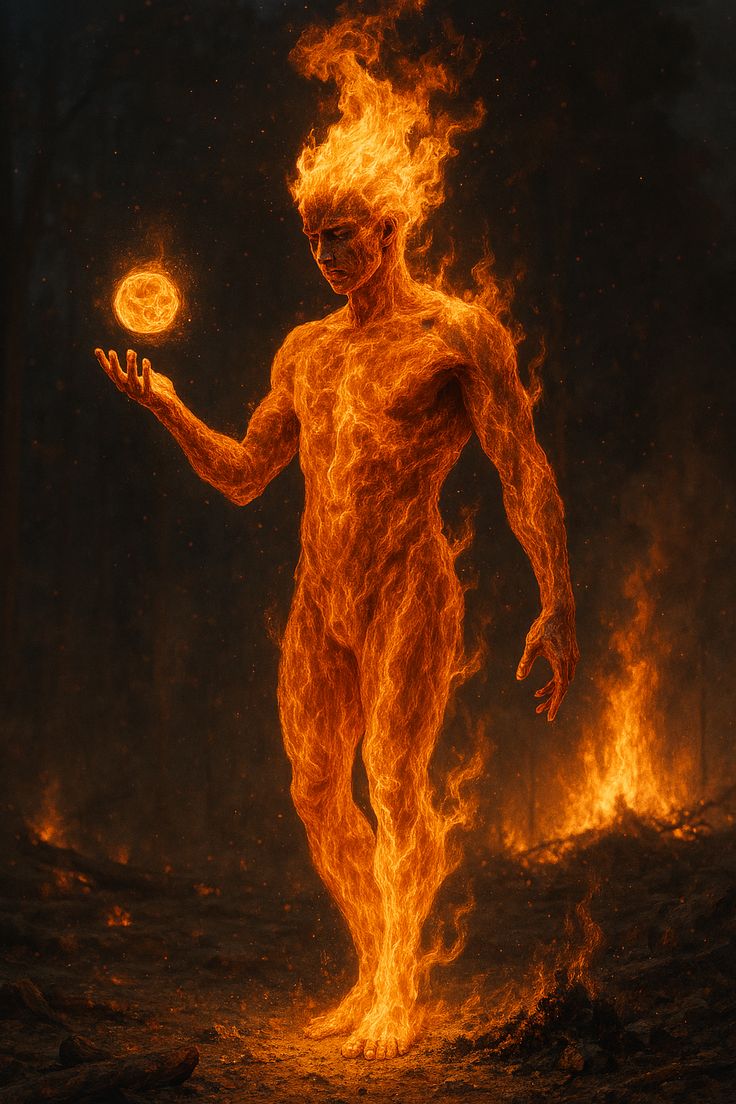
so cold it puts the fire out
Pliny reports a creature whose chill extinguishes flame, and the bestiaries repeat him for a thousand years without checking. Merchants sold fireproof cloth as “salamander wool” — it was asbestos. Paracelsus later promoted the animal to the elemental spirit of fire itself.
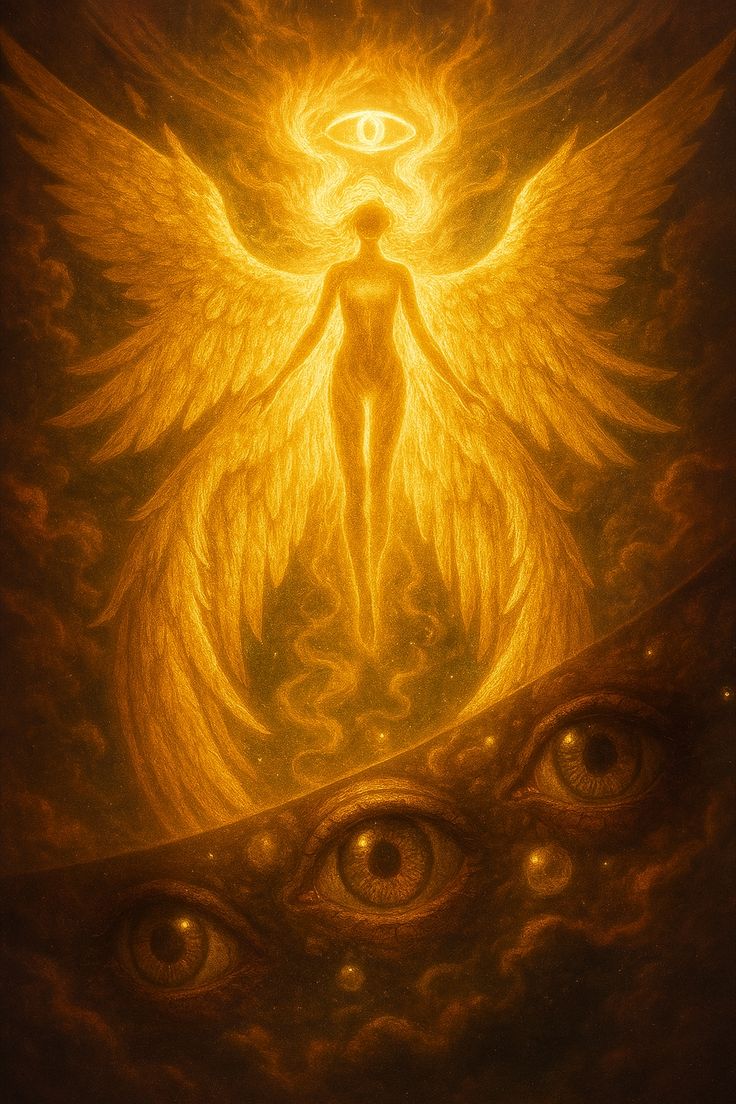
the burning ones
The name is built on a root meaning to burn. In Isaiah’s vision they have six wings, and one of them carries a live coal from the altar in tongs to touch the prophet’s mouth. Later hierarchies add the eyes: the ophanim are described as wheels full of them.
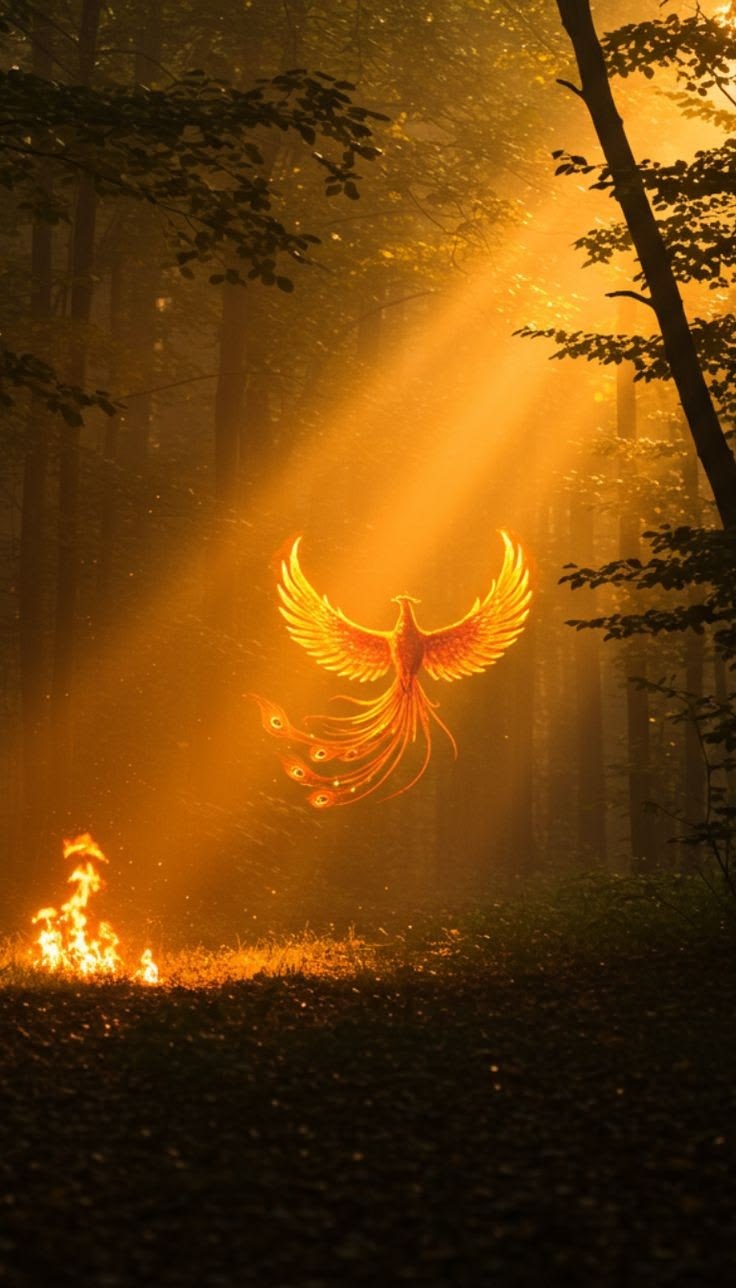
one feather is already too much
She glows brightly enough to light a garden at night, and a dropped feather is both a treasure and a summons — whoever picks one up is obliged to go looking for the bird. The tales are collected in Afanasyev; the quest structure is what Stravinsky set to music.
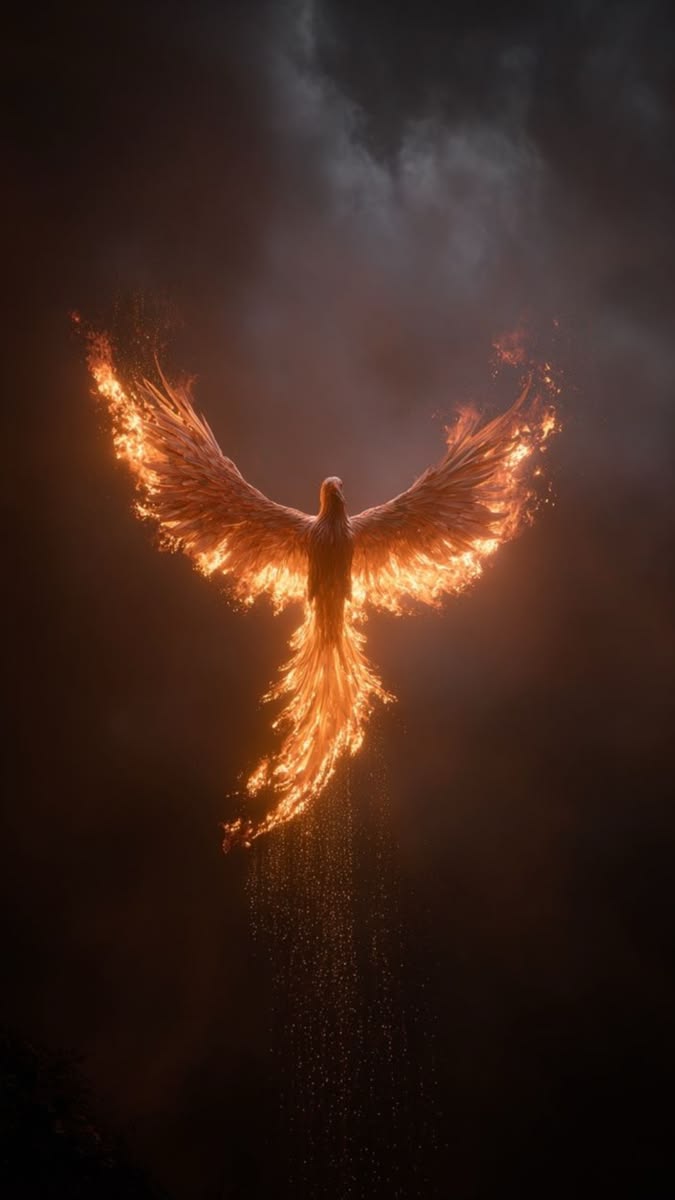
a bird with a timetable
Herodotus reports it second-hand and says plainly that he does not believe it. Worth knowing: the fire is a late arrival. The oldest accounts are about extreme longevity and a return to a sacred city, not about burning — combustion was added because it made the cycle easy to picture.
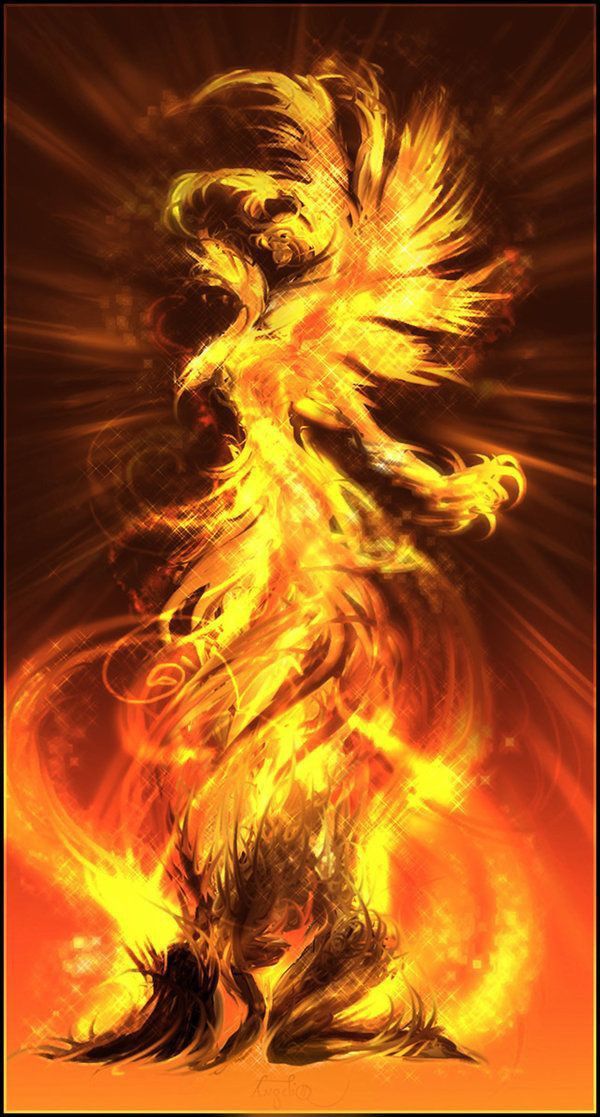
not a phoenix, whatever the label says
A composite bird of the south, emblem of the empress and of harmony restored. It was translated as “phoenix” for Western convenience, and the mistranslation has outlived every correction since. It does not burn, and it does not die — which removes the entire point of the other bird.
made of smokeless fire
The Qur’an describes them as created from a flame without smoke — a whole order of beings rather than one animal, with the ifrit among its more formidable ranks. The lamp-genie of European retelling is a very late and very domesticated descendant of that idea.
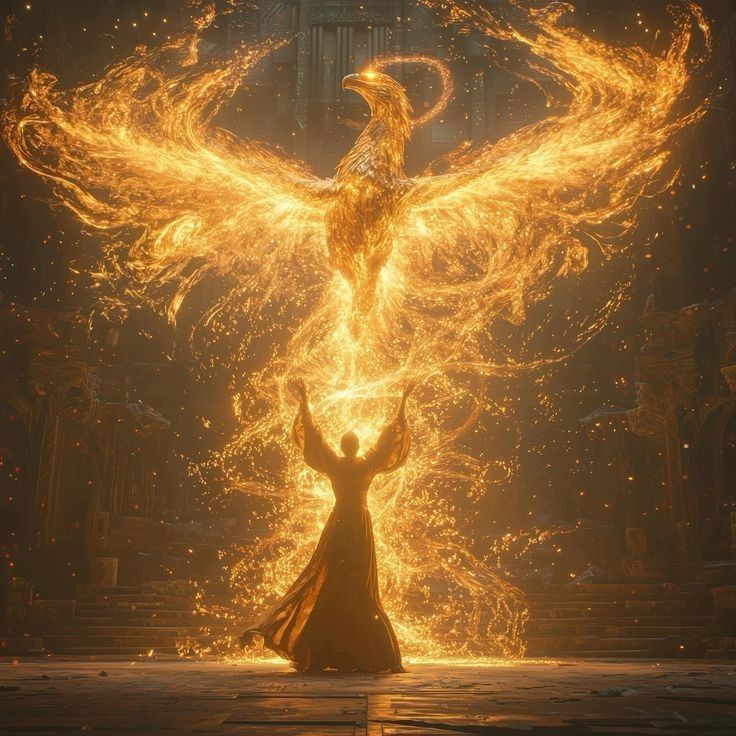
The next section is that story, five times over
The oldest plot there is
Traditions with no contact and no common ancestor keep telling the same story with different actors. Fire belongs to someone else, somebody takes it, and the taker pays.
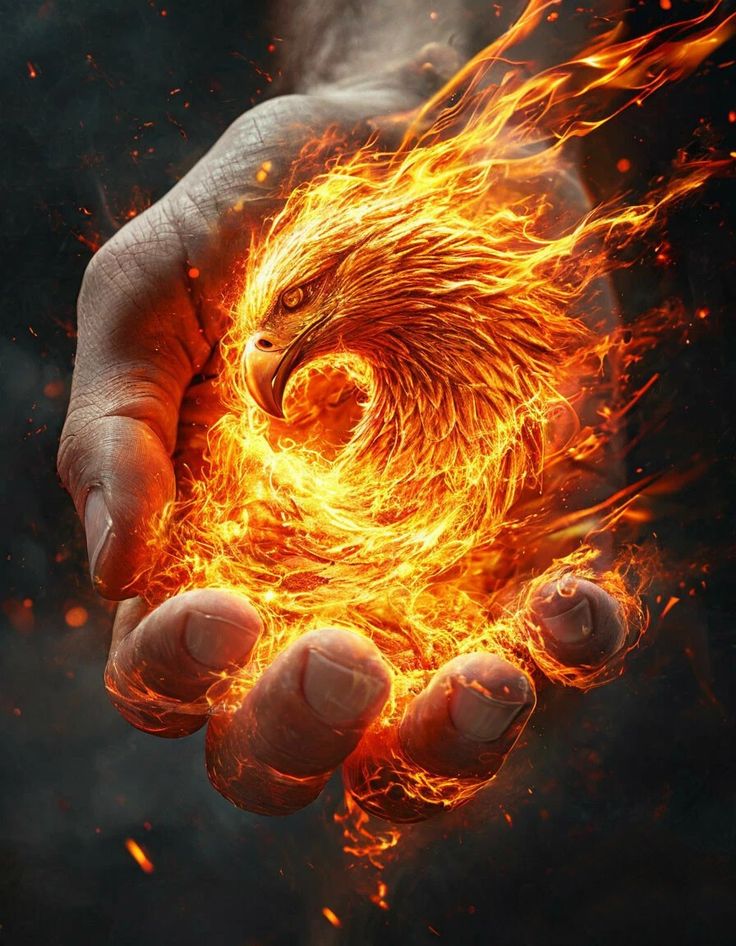
First, that fire had an owner — a god, a sky, a jealous keeper — and that people did not begin with it. Second, that acquiring it required theft or trickery rather than prayer. Third, and most consistently, that it cost the thief something permanent.
The endings are the interesting part. A surprising number are not about punishment at all but about address: they finish by explaining where fire lives now, so that you can find it again. In the wood. In the stone. On the hearth, if somebody keeps it.
| Tradition | Who took it | From whom | What it cost |
|---|---|---|---|
| Greek | Prometheus, in a fennel stalk | Zeus | Chained to a rock; an eagle at his liver, daily, for ages |
| Māori | Māui, by trickery | Mahuika, who kept fire in her fingernails | She threw the last flame into the trees — which is why it is in wood |
| Vedic | Mātariśvan | The far place where Agni was hidden | Fire returns, but must be rekindled by ritual ever after |
| Tlingit and neighbours | Raven, who takes the daylight too | The one who hoarded both | The smoke turned him black, and he stayed that way |
| Cherokee | Water Spider, after braver animals failed | The burning sycamore on the island | Nothing — she wove a bowl and carried the coal on her back |
What left the workshop
Every one of these was commissioned, made under pressure, and came out slightly wrong. That is not a coincidence in the storytelling — the flaw is usually the point.
Brokkr and Eitri, on a wager
Made during a bet, with Loki in fly form biting the smith’s eyelid to spoil the work. The bellows falter for a moment and the handle comes out short. The most famous weapon in the tradition is a documented manufacturing defect.
Why the flaw survives the retellingsThe sons of Ivaldi
The spear that cannot miss, from the same round of dwarven commissions. Note what the tradition finds interesting: not the weapon’s power, but who made it, for whom, and what the makers were owed afterwards.
The dwarves as subcontractorsHephaestus, Iliad Book 18
Homer spends over a hundred lines not on the shield but on its manufacture, and engraves an entire working world onto it — harvests, weddings, a murder trial. The oldest description of a workshop in Western literature is also its first special effect.
The scene it inventedRegin, from the shards
Broken in the father’s hand, carried in pieces, hammered back together for the son. Reforging is a distinct motif from forging: it says the past is not lost, only unusable in its current shape.
Broken blades and inheritanceIlmarinen, Kalevala
An object of endless prosperity, forged from improbable ingredients, fought over, and finally shattered. The poem never says what it is. A mill, a pillar, a coin die — the ambiguity may well be original.
Wealth as a made thingOrigin disputed by century
Pulled from a stone in one telling, handed up out of a lake in another, and forged in Avalon in a third. The Arthurian corpus is not one story, and the sword’s provenance changes with whoever is retelling it.
How we label contested claimsThe scene that keeps getting rebuilt
Homer
Iliad, Book XVIII
Ask someone to recall a forge scene and they will describe heat, hammer-fall, a quench, sparks, a face lit from below. Ask them to describe the finished blade and they will manage about six words. This is not a failure of memory. It is how the scene was built in the first place.
Homer had the option of simply presenting the shield of Achilles. Instead he stays in the workshop, watching bellows breathe and metal go into the fire, and only then walks us around the images being beaten into it. The object is treated as evidence of labour. Three thousand years later a game studio will spend its budget on the same shot.
A made object arrives carrying its cost. You cannot show the hammer-fall and then pretend the thing was free, which is why the forge scene is where a story quietly sets its price.
The forge is one of the few classical settings that is lit from below, in one colour, in the dark. It flatters a silhouette, it needs no sky, and it has looked expensive in every medium ever invented.
Fires with a reputation
Three flames that outlived the people tending them — one of which is still burning on a hillside you could walk up this afternoon.
The Byzantine incendiary weapon that burned on the surface of water and could not be put out with it. It was sprayed from siphons at enemy ships, and it saved Constantinople more than once. The formula was held so tightly as a state secret that it was lost with the empire: nobody today knows what was in it.
Tended in Rome by six priestesses and never allowed to go out. If it did, the failure was a public emergency and a criminal matter — and the flame could not simply be borrowed from the nearest hearth. It had to be rekindled by friction, or by sunlight through a burning glass. Clean fire, or none.
On a Lycian hillside in Turkey, methane seeping through rock has burned in the open for thousands of years. Ancient sailors navigated by the flames, and the site was identified with the Chimaera — a creature of fire pinned beneath the mountain. The gas is still rising. So is the fire.
If you read one thing tonight
Actual stories rather than summaries of stories, with where to find each one. All five are old enough to be freely available, and four of them are short.
Baba Yaga sends the girl home with a skull on a stick, and the eye-sockets are burning. By morning the stepmother and stepsisters who tormented her are ash on the floor. A fairy tale in which fire keeps score.
It opens with a single glowing feather in an orchard and never slows down: three brothers, a wolf who does all the competent work, and a bird whose theft costs far more than the apples she came for.
A soldier finds a striking-box that summons three dogs with eyes the size of saucers, mill-wheels and round towers. Andersen is not usually filed under horror, and this one has no business being as unsettling as it is.
Māui asks the fire-goddess for a flame, puts it out, and asks again — until she has given up all but the last of her burning fingernails. She throws that one into the trees. Which is the answer to the question the story was really asking.
Loki, certain he can out-eat anyone, is set opposite a rival at a trough of meat. They meet in the middle. But Logi has eaten the bones and the trough as well, because Logi is wildfire and was never a person at all.
Editorial standards
Myth is easy to write about badly, because almost any sentence about it sounds true. These five rules are the whole policy.
Reader questions
Short answers, each with a longer essay behind it if you want the working.
Hephaestus is thrown from Olympus and walks with difficulty. Wayland is deliberately hamstrung by a king who wants to keep him at the anvil. The motif recurs often enough to be noticed and the explanations range widely — from the marking of a figure who fits no ordinary social role, to the blunt reading that the smith is being physically bound to his workshop. It is not settled, and anyone who tells you it is has picked a side. The full essay is here.
Both, depending on the century you are reading. The sword in the stone and the sword from the lake are separate objects in some texts and the same object in others. The Arthurian material is not a single story but roughly a thousand years of retelling, and the blade’s origin shifts with the teller.
Cold iron turns away fairies, spirits and witches across a wide range of European folklore. The usual explanation ties this to iron arriving as a newer and harder technology among older peoples and older beliefs. It is a plausible reading rather than a documented origin, and we flag it that way.
The object Ilmarinen forges in the Kalevala, which brings endless prosperity to whoever holds it. The poem is not clear about what it is. A mill, a world-pillar, a coin die and several other readings have all been argued. The ambiguity may be original rather than something lost in transmission. More on made wealth here.
Sometimes strikingly. Pattern-welding, quenching, and reforging a broken blade from its own fragments are all genuine practices with clear mythic echoes, and the Homeric bellows-worked workshop is recognisable to anyone who has stood in one. Dwarves casting a war-hammer in a single pour, however, are not doing metallurgy.
Because it is the one mythic location that is also a functioning interface. A forge puts improvement, cost and risk in the same room and gives a menu an in-world reason to exist. The symbolism and the systems design happen to want exactly the same thing. The full essay is here.
Who is behind this
Emberwright is written in Sheffield — a city that spent four hundred years making the objects this archive keeps reading about — by two people with a shelf of translations and a standing argument about Wayland.
We are not a university department and do not claim to be. Everything here is a reading of published translations and scholarship, marked with what is established, what is likely, and what is still an argument. Nothing is published anonymously, and every essay carries a date.